
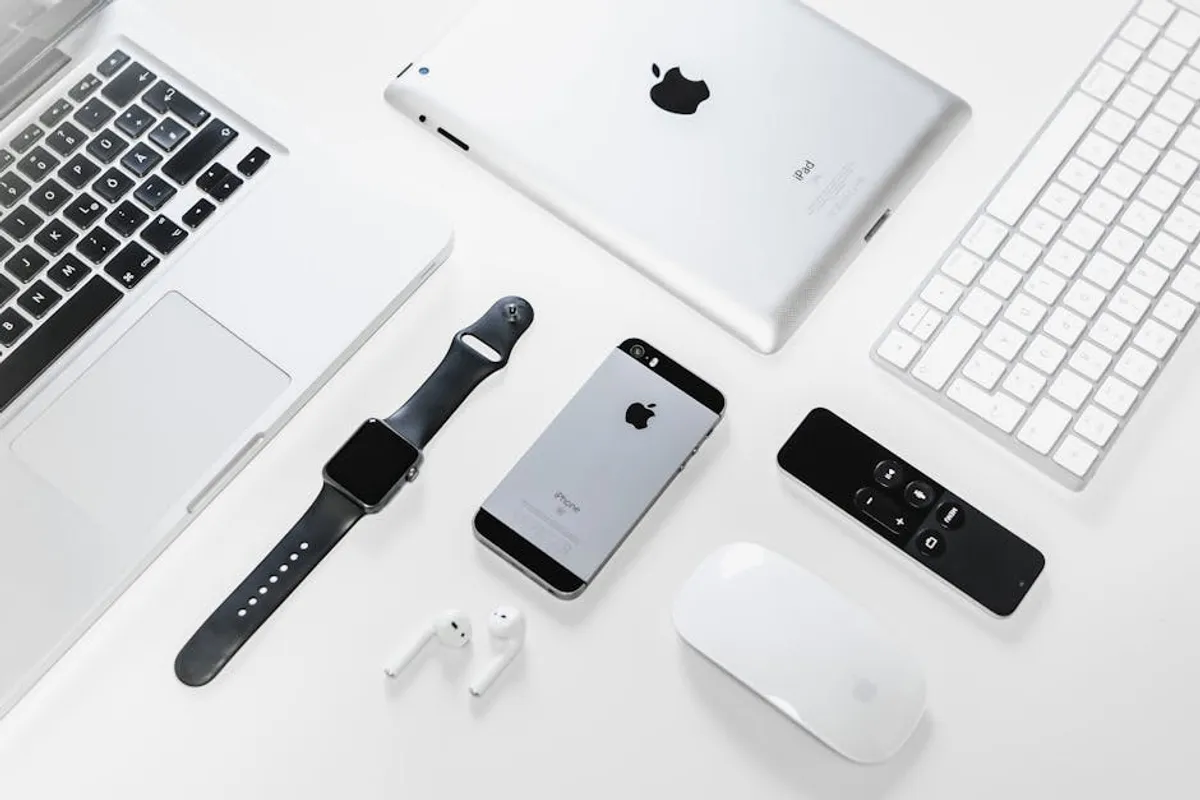
While "Apple Teleport" is not an official product or service offered by Apple Inc., the concept it evokes—seamless, instant transfer of data, content, or even remote access—resonates with many technological aspirations. Users searching for "Apple Teleport" are often looking for solutions that provide ultra-fast data exchange, cross-device continuity, or secure remote control, mirroring the intuitive and integrated experience associated with Apple's ecosystem.
This guide explores the hypothetical concept of what "Apple Teleport" might entail if it were a real offering, examining its potential features and uses. Critically, it then details existing technologies and services that offer similar capabilities or fulfill the underlying user needs associated with "teleportation" in a digital or logistical sense. The focus remains on practical, commercially viable alternatives for achieving rapid data transfer, remote access, and efficient digital workflow solutions, enabling informed decisions based on current market offerings.
Hypothetical Features of Apple Teleport
If "Apple Teleport" existed, it would likely embody several key features designed to enhance Apple's ecosystem by eliminating friction in data movement and access. These features would aim for an experience that feels instantaneous and effortless, aligning with the "it just works" philosophy.
Instantaneous File & Data Transfer
The primary hypothetical feature would be the ability to transfer any file or data type—documents, photos, videos, application states—between Apple devices, or even to authorized non-Apple devices, with zero perceptible latency. This would extend beyond current AirDrop capabilities, potentially allowing transfers over vast distances without reliance on traditional internet speeds, perhaps through a proprietary, low-latency network or advanced compression algorithms.
Cross-Device Application & Session Handoff
Imagine working on a document on a MacBook, then instantly "teleporting" that exact session, open applications, and cursor position to an iPad or iPhone without saving, syncing, or reopening. This feature would enable true, uninterrupted workflow continuity across devices, making the device itself secondary to the task at hand.
Secure Remote Access & Control
Beyond simple screen sharing, "Apple Teleport" could offer secure, high-fidelity remote access to a user's entire digital environment. This would allow full control of a Mac from an iPhone, or access to a home server from anywhere, with the same responsiveness as local interaction. Security would be paramount, leveraging Apple's encryption and privacy frameworks to ensure data integrity and user authentication.
Augmented Reality & Spatial Data Sharing
With Apple's investment in augmented reality, "Teleport" could extend to sharing spatial data. This might involve instantly sharing AR environments, collaborative 3D models, or even "teleporting" a digital twin of a physical space for remote viewing and interaction.
Hypothetical Uses for Apple Teleport
The hypothetical features of "Apple Teleport" would translate into transformative uses across personal, professional, and creative domains.
Enhanced Productivity & Collaboration
For professionals, "Teleport" would eliminate delays in sharing large design files, video edits, or codebases among team members, regardless of their physical location. Real-time, seamless collaboration on complex projects would become the norm, reducing the need for traditional file-sharing services or cumbersome version control.
Seamless Personal Computing
Individuals could move effortlessly between personal devices. Start watching a movie on an Apple TV, "teleport" it to an iPad for on-the-go viewing, and then "teleport" a snapshot of that viewing session to a Mac for a quick social media share, all without interruption or manual syncing.
Rapid Content Creation & Distribution
Content creators would benefit from instant transfers of raw footage from cameras to editing suites, or quick distribution of finished media to various platforms. The speed and efficiency would streamline production workflows, allowing for faster iteration and delivery.
Advanced Remote Work & Education
Remote work and learning would gain unprecedented fluidity. Accessing a powerful desktop workstation from a lightweight tablet, or instantly sharing interactive educational content with students across different devices, would become as simple as a gesture.
What to Look For in an Alternative
When seeking alternatives to the hypothetical "Apple Teleport," consider the specific needs you aim to address. No single solution will replicate all potential "Teleport" functionalities, so prioritizing is key.
Speed and Efficiency: How quickly does the solution transfer data, especially large files? Does it optimize for local network speeds or rely solely on internet bandwidth?
Cross-Platform Compatibility: If your workflow involves both Apple and non-Apple devices, does the alternative support all necessary operating systems (iOS, macOS, Windows, Android, Linux)?
Security and Privacy: What encryption protocols are used? Does the service offer end-to-end encryption? What are its data retention policies? Is multi-factor authentication available?
Integration and Ecosystem: How well does the alternative integrate with your existing tools and workflows? Does it offer APIs or plugins for other applications?
Remote Access Capabilities: If remote control is a priority, does the alternative provide low-latency, high-fidelity screen sharing, and full input control?
Cost Structure: Is it a one-time purchase, subscription-based, or freemium? Does the pricing scale with users, data volume, or features?
Ease of Use: Is the interface intuitive? Does it require extensive setup, or is it ready to use with minimal configuration?
Alternatives to the Apple Teleport Concept
The following alternatives address various aspects of the "Apple Teleport" concept, focusing on real-world solutions for rapid data transfer, remote access, and digital continuity.
1. AirDrop
AirDrop is Apple's existing solution for wireless file transfer between nearby Apple devices (iPhone, iPad, Mac). It leverages Wi-Fi and Bluetooth to create a direct peer-to-peer connection, enabling fast and secure sharing of photos, videos, documents, and links without relying on an internet connection or cloud services. It's built directly into the operating systems, making it highly integrated and user-friendly for Apple users.
Key Features: Local peer-to-peer transfer, automatic device discovery, secure sharing, built-in to iOS/iPadOS/macOS.
Pricing: Included with Apple devices; no additional cost.
Best For: Immediate, local file sharing between Apple devices, particularly for photos, videos, and documents within close proximity.
Pros:
- Seamless integration with Apple's ecosystem, requiring no setup beyond enabling Wi-Fi and Bluetooth.
- High-speed transfers for large files due to direct Wi-Fi connection, bypassing internet bandwidth limitations.
- Secure by design, using TLS encryption for transfers and requiring user acceptance for incoming files.
- No internet connection required for transfers, making it ideal for offline scenarios.
Cons:
- Limited to Apple devices only, making it unsuitable for cross-platform workflows.
- Range is restricted to Bluetooth and Wi-Fi direct capabilities, typically within a single room or close proximity.
- Does not support remote access or cross-device application handoff beyond basic content sharing.
2. iCloud
iCloud is Apple's suite of cloud services, providing storage, synchronization, and sharing across Apple devices. It automatically backs up and syncs data like photos, contacts, calendars, documents (via iCloud Drive), and app data. For the "Teleport" concept, iCloud offers continuous data availability and cross-device continuity, ensuring that changes made on one device are reflected on others, albeit with internet-dependent syncing latency.
Key Features: Cloud storage (iCloud Drive), photo library sync, device backup, password sync (iCloud Keychain), cross-device app data sync, Family Sharing.
Pricing: 5GB free storage; paid tiers start at $0.99/month for 50GB, up to 12TB for $59.99/month. Bundled with Apple One subscriptions.
Best For: Maintaining data consistency and backups across all Apple devices, ensuring access to personal files and app data from anywhere with an internet connection.
Pros:
- Deep integration with Apple's operating systems and applications, providing a seamless user experience.
- Automatic background synchronization ensures data is always up-to-date across devices without manual intervention.
- Robust security features, including end-to-end encryption for sensitive data like passwords and health information.
- Offers a complete ecosystem for personal data management, from photos to documents and device backups.
Cons:
- Primarily designed for Apple devices, with limited functionality or less seamless integration on non-Apple platforms.
- Synchronization speeds are dependent on internet bandwidth, which can introduce latency for large file transfers.
- Free storage tier (5GB) is often insufficient for most users, necessitating a paid subscription.
3. Google Drive / Google Workspace
Google Drive is a cloud-based file storage and synchronization service that integrates deeply with Google Workspace (formerly G Suite), offering a comprehensive suite of productivity tools. It provides robust capabilities for storing, sharing, and collaborating on documents, spreadsheets, and presentations across various devices and operating systems. Its cross-platform nature makes it a strong alternative for digital "teleportation" of data and collaborative workspaces.
Key Features: Cloud storage, real-time collaboration on documents, cross-platform access, file version history, robust search, integration with other Google services.
Pricing: 15GB free storage (shared across Google services); Google Workspace plans start at $6/user/month for 30GB, up to custom enterprise solutions.
Best For: Cross-platform file storage, sharing, and real-time collaboration, especially for teams using Google's productivity suite.
Pros:
- Excellent cross-platform compatibility, accessible via web, desktop clients (Windows, macOS), and mobile apps (iOS, Android).
- Powerful real-time collaboration features within Google Docs, Sheets, and Slides, enabling multiple users to work simultaneously.
- Generous free storage tier and scalable paid plans suitable for individuals and large enterprises.
- Strong search capabilities and integration with the broader Google ecosystem for enhanced productivity.
Cons:
- Performance for very large files can be affected by internet speeds, similar to other cloud services.
- Privacy concerns for some users regarding data stored on Google's servers, despite strong security measures.
- Offline access requires specific setup and may not be as seamless as online usage.
4. Dropbox
Dropbox is a long-standing cloud storage and file synchronization service known for its simplicity and cross-platform support. It allows users to store files in the cloud, sync them across devices, and share them with others. For the "Teleport" concept, Dropbox provides reliable, fast synchronization and access to files from virtually any device, making it a staple for individuals and businesses needing flexible data availability.
Key Features: Cloud storage, file synchronization, shared folders, file requests, version history, selective sync, integration with various third-party apps.
Pricing: 2GB free storage; paid plans start at $11.99/month for 2TB (Plus), with business plans offering more storage and features.
Best For: Cross-platform file synchronization, secure file sharing, and collaborative document management for diverse teams and individual users.
Pros:
- Excellent cross-platform compatibility and a user-friendly interface across desktop and mobile applications.
- Efficient file synchronization, often faster than some competitors for specific use cases, with block-level sync.
- Robust version history and recovery options, allowing users to revert to previous file states.
- Strong integration with a wide array of third-party applications and services, enhancing workflow flexibility.
Cons:
- Limited free storage (2GB) compared to some competitors, often necessitating a paid subscription quickly.
- Advanced collaboration features are not as deeply integrated or real-time as those offered by Google Workspace.
- Can consume significant local disk space if not managed with selective sync or Smart Sync features.
5. TeamViewer
TeamViewer is a remote access, remote control, and remote support software that allows users to connect to and control computers or mobile devices from anywhere in the world. It provides a secure, encrypted connection, enabling users to "teleport" their presence to a distant machine, interact with its desktop, and transfer files. This directly addresses the remote access aspect of the "Apple Teleport" concept.
Key Features: Remote desktop control, file transfer, cross-platform support, remote printing, session recording, wake-on-LAN.
Pricing: Free for personal use (non-commercial); business licenses start from approximately $50.90/month (billed annually) for a single user, with various tiers for multiple users and features.
Best For: Remote technical support, managing unattended servers, accessing personal computers from a distance, and facilitating remote work.
Pros:
- Exceptional cross-platform compatibility, supporting Windows, macOS, Linux, iOS, Android, and even IoT devices.
- High-performance remote control with optimized video and audio streaming, minimizing latency.
- Robust security measures, including end-to-end encryption, two-factor authentication, and trusted device management.
- Comprehensive feature set for remote support, including chat, session recording, and remote printing.
Cons:
- The free version has limitations and may flag commercial use, requiring a paid license for professional applications.
- Can be resource-intensive on older machines or slower internet connections, impacting performance.
- The subscription model for business use can be costly for small teams or infrequent commercial users.
6. WeTransfer
WeTransfer is a popular web-based service designed for sending large files easily and quickly. It simplifies the process of sharing large documents, videos, and photo collections that might exceed email attachment limits. While not a full "teleportation" solution, it excels at the rapid, secure transfer of substantial data packets between individuals, fulfilling a core need for fast content delivery.
Key Features: Large file transfers (up to 2GB free, 200GB with Pro), password protection, download tracking, custom branding (Pro), secure transfer links.
Pricing: Free for transfers up to 2GB; WeTransfer Pro costs $12/month or $120/year for transfers up to 200GB and 1TB storage.
Best For: Sending large files (e.g., high-resolution images, video drafts, design assets) to clients or collaborators who may not share the same cloud storage platform.
Pros:
- Extremely simple and intuitive interface, requiring no account creation for basic transfers.
- Supports very large file sizes, making it ideal for media professionals and designers.
- Provides download tracking and optional password protection for enhanced security.
- Offers a quick, temporary solution for one-off large file transfers without long-term commitment.
Cons:
- Primarily a file transfer service; it lacks synchronization, collaboration, or remote access features.
- Files are stored temporarily on WeTransfer's servers, with limited retention periods for free users.
- Relies entirely on internet speeds for upload and download, which can be a bottleneck for very large files.
7. Microsoft OneDrive
Microsoft OneDrive is a cloud storage and synchronization service that integrates deeply with Microsoft's ecosystem, including Windows and Office 365. It provides robust file storage, sharing, and collaboration capabilities across various devices. For users seeking data continuity and accessibility, OneDrive offers a strong alternative, especially if their workflow is centered around Microsoft Office applications.
Key Features: Cloud storage, file synchronization, real-time collaboration with Office apps, Personal Vault for sensitive files, file version history, cross-platform access.
Pricing: 5GB free storage; paid plans start at $1.99/month for 100GB. Often bundled with Microsoft 365 subscriptions, which offer 1TB or more per user.
Best For: Users heavily invested in the Microsoft ecosystem (Windows, Office 365), requiring seamless file access, sharing, and collaboration.
Pros:
- Deep integration with Windows operating system and Microsoft Office applications, enhancing productivity.
- Strong collaboration features for Word, Excel, and PowerPoint documents, allowing real-time co-authoring.
- "Files On-Demand" feature helps save local disk space by only downloading files when accessed.
- Robust security features, including Personal Vault for sensitive documents and ransomware detection.
Cons:
- Free storage (5GB) is often insufficient for comprehensive backup needs, requiring a paid upgrade.
- While cross-platform, its deepest integration and most seamless experience are within the Microsoft ecosystem.
- Synchronization speeds are dependent on internet bandwidth, similar to other cloud-based solutions.
How to Choose the Right Alternative
Selecting the optimal alternative to the hypothetical "Apple Teleport" requires a clear understanding of your primary needs. If your priority is instantaneous, local file sharing between Apple devices, AirDrop is the direct, built-in solution. For seamless data synchronization and backup across your Apple ecosystem, iCloud is indispensable, though it relies on internet connectivity.
For cross-platform collaboration and cloud storage, particularly if real-time document editing is crucial, Google Drive/Workspace or Dropbox offer robust ecosystems. If your organization is heavily invested in Microsoft products, OneDrive provides a highly integrated experience. When remote access and control of a distant computer are paramount, TeamViewer stands out with its comprehensive features and cross-platform support. Finally, for simply sending very large files to external recipients without needing ongoing sync or collaboration, WeTransfer provides a straightforward, efficient service.
Evaluate each option based on its core strengths, compatibility with your existing hardware and software, security protocols, and cost-effectiveness. A hybrid approach, combining several tools for different aspects of your workflow, may ultimately provide the most comprehensive solution.
Frequently Asked Questions
What is Apple Teleport?
"Apple Teleport" is not an official product or service offered by Apple Inc. It is a hypothetical concept representing advanced, instantaneous data transfer, cross-device continuity, and remote access capabilities that users might associate with an ideal Apple solution.
Can I truly "teleport" files between devices?
While literal teleportation is not possible, technologies like AirDrop, cloud synchronization services (iCloud, Google Drive, Dropbox), and secure file transfer platforms (WeTransfer) offer various forms of rapid digital transfer that can feel nearly instantaneous for the user, depending on file size and network conditions.
Are there Apple-specific solutions for fast file transfer and sync?
Yes, Apple provides AirDrop for local, peer-to-peer file sharing and iCloud for cloud-based synchronization and storage across its devices. These services are deeply integrated into the Apple ecosystem.
What are the best alternatives for remote access to my computer?
TeamViewer is a leading solution for comprehensive