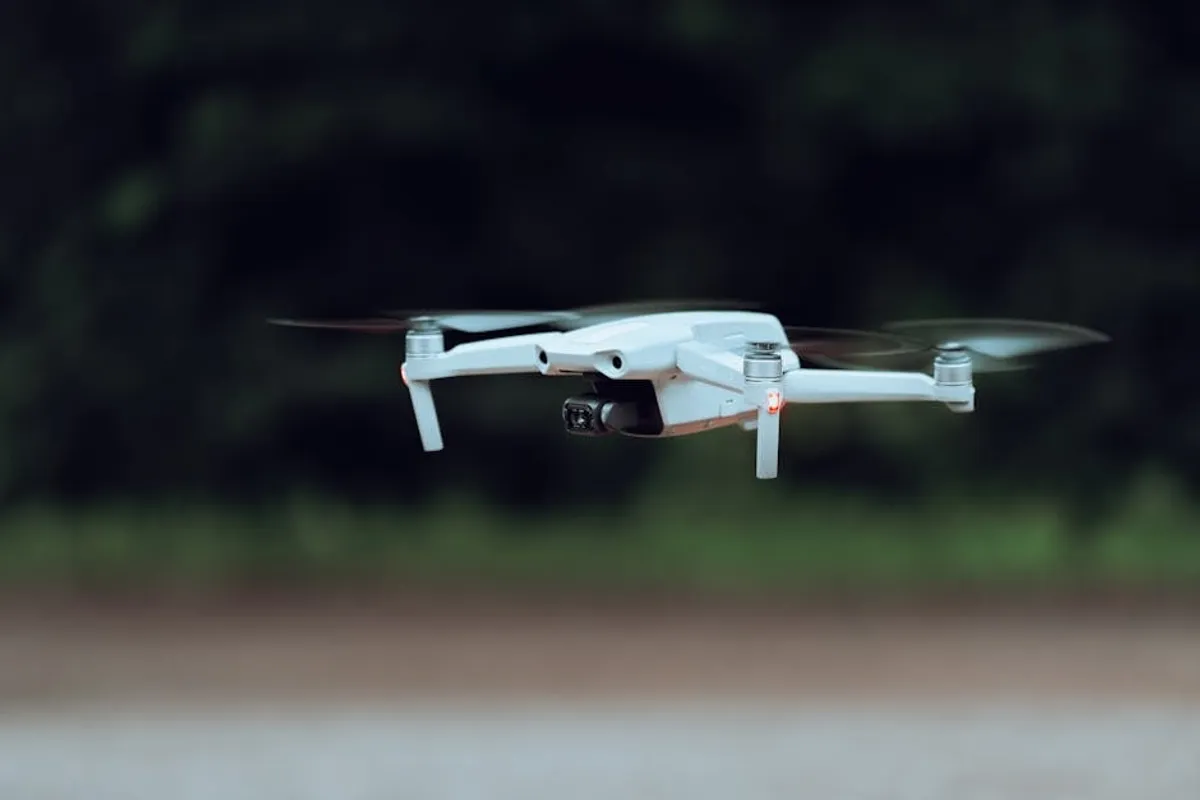
Entering the world of drone piloting can be an exciting, yet daunting, prospect. For beginners, the sheer volume of options, coupled with varying price points and technical specifications, often leads to analysis paralysis. The ideal beginner drone prioritizes ease of control, durability against inevitable bumps and crashes, and a clear upgrade path, rather than professional-grade camera sensors or extended flight ranges. Understanding the core functionalities that simplify the learning curve—such as GPS stabilization, altitude hold, and one-key return-to-home—is paramount. This guide focuses on models that offer a balanced introduction to drone operation, ensuring an engaging experience without requiring an immediate significant investment or advanced piloting skills.
What to Look For in a Beginner Drone
When selecting a drone for a first-time pilot, several factors contribute to a smoother learning experience and a more satisfying overall purchase. Prioritizing these elements helps mitigate common beginner frustrations and ensures a more productive introduction to aerial photography and flight:
- Ease of Control: Look for features like one-key take-off/landing, altitude hold, and headless mode. GPS stabilization is a significant advantage, as it allows the drone to maintain its position automatically, reducing drift and simplifying outdoor flight.
- Durability and Propeller Guards: Crashes are part of the learning process. Drones constructed from resilient plastics or with modular designs that allow for easy part replacement are beneficial. Integrated or included propeller guards protect both the drone and its surroundings from minor impacts.
- Battery Life: Longer flight times (10-20 minutes is typical for beginners) mean more practice per charge. Consider models that offer easily swappable batteries, allowing for extended sessions without lengthy recharging breaks.
- Camera Quality (Optional but Recommended): While not the primary focus for a beginner, a decent 720p or 1080p camera can add to the fun, allowing pilots to capture their first aerial photos and videos. Gimbal stabilization, even basic electronic image stabilization (EIS), improves video smoothness.
- Price Point: Beginner drones range from under $50 to several hundred dollars. Establish a budget that allows for potential damage or loss without significant financial strain. More affordable models often serve as excellent training platforms before investing in advanced equipment.
- Safety Features: Automatic return-to-home functions (often GPS-dependent), low battery warnings, and obstacle avoidance sensors (even basic ones) enhance safety and reduce the likelihood of losing the drone.
- Portability: Foldable designs make it easier to transport the drone, encouraging more frequent use in various locations.
1. DJI Mini 2 SE
The DJI Mini 2 SE positions itself as the entry point into DJI's ecosystem, offering a blend of portability, user-friendliness, and reliable flight performance. It retains the sub-250g weight, meaning it often avoids registration requirements in many regions, a significant advantage for new pilots. Its OcuSync 2.0 transmission system provides a stable connection and extended range, reducing anxiety about signal loss. The 2.7K camera, stabilized by a 3-axis mechanical gimbal, delivers surprisingly smooth and clear footage for its class, making it suitable for capturing initial aerial perspectives.
Best For: First-time drone buyers seeking a premium beginner experience with robust flight stability and a capable camera, without the need for extensive regulatory registration.
Pros:
- Sub-250g weight often exempts it from registration.
- Excellent flight stability with GPS and downward vision sensors.
- Reliable OcuSync 2.0 transmission for extended range and strong signal.
- 3-axis gimbal-stabilized 2.7K camera delivers smooth video.
- Intuitive controls and one-tap QuickShots simplify content creation.
Cons:
- Lacks obstacle avoidance sensors beyond downward vision.
- Limited intelligent flight modes compared to higher-end DJI models.
- Price point is higher than many entry-level toy drones.
Verdict: The Mini 2 SE is a strong recommendation for beginners who prioritize reliable flight, a good camera, and a pathway to more advanced drones, offering a significant step up from basic toy models without being overly complex.
2. Ryze Tello (Powered by DJI)
The Ryze Tello is a compact, lightweight drone developed by Ryze Technology with Intel and DJI components, emphasizing educational and indoor flight. It’s controlled primarily via a smartphone app, making it accessible to those comfortable with mobile interfaces. Its vision positioning system provides stable hovering indoors, and it features multiple pre-programmed flight modes like 'Throw & Go' and 8D flips. The 720p camera is suitable for casual photos and videos, and its support for coding platforms like Scratch makes it appealing for STEM education.
Best For: Absolute beginners, children, and those interested in learning basic drone programming or primarily flying indoors.
Pros:
- Extremely easy to fly with smartphone control and vision positioning.
- Affordable entry point into drone piloting.
- Durable and suitable for indoor use with propeller guards.
- Supports Scratch programming for educational purposes.
- Multiple fun flight modes like flips and 'Bounce Mode'.
Cons:
- Limited flight range and short battery life (around 13 minutes).
- 720p camera lacks stabilization, resulting in shaky video outdoors.
- Struggles in windy conditions due to light weight.
- Requires a smartphone for operation, no dedicated controller included.
Verdict: The Tello serves as an excellent, low-risk introduction to drone flight, particularly for indoor environments and educational purposes. Its simplicity and robust build make it forgiving for new pilots.
3. Holy Stone HS110D
The Holy Stone HS110D is a popular budget-friendly option designed with beginners in mind, offering a suite of features that simplify flight. It includes altitude hold, headless mode, one-key take-off/landing, and a 1080p camera with FPV (First Person View) capabilities, streaming directly to a smartphone. Its modular battery design and included propeller guards enhance durability and ease of use. While not a professional camera drone, it provides a practical platform for learning fundamental flight controls and basic aerial photography.
Best For: Budget-conscious beginners seeking a feature-rich training drone with FPV capabilities and a serviceable camera for learning.
Pros:
- Affordable price point.
- Easy to fly with altitude hold, headless mode, and one-key functions.
- 1080p camera with FPV streaming to a smartphone.
- Comes with propeller guards for added durability.
- Gravity sensor mode for intuitive control.
Cons:
- Camera quality is basic, lacking stabilization for smooth video.
- Limited flight range and battery life (around 10 minutes).
- No GPS stabilization, requiring more manual input in outdoor conditions.
- Can be affected by wind due to its lightweight construction.
Verdict: The HS110D offers significant value for its price, providing a comprehensive set of beginner-friendly features that make learning to fly accessible and enjoyable, especially for those prioritizing FPV experience.
4. Potensic Atom SE
The Potensic Atom SE aims to compete directly with entry-level DJI Mini drones by offering a sub-250g weight, GPS stabilization, and a 4K camera at a competitive price. Its foldable design enhances portability, and the drone includes a dedicated controller with a smartphone holder for a more tactile flight experience. The Atom SE provides a flight time of up to 31 minutes per battery and a transmission range of up to 4km, making it a compelling option for beginners looking for extended exploration capabilities.
Best For: Beginners who want a sub-250g drone with GPS, a 4K camera, and longer flight times, without the higher cost of premium brands.
Pros:
- Sub-250g weight for regulatory convenience.
- GPS stabilization for stable outdoor flight and return-to-home.
- 4K camera captures detailed photos and videos.
- Impressive 31-minute flight time per battery.
- Foldable design and dedicated controller enhance usability.
Cons:
- Camera lacks mechanical gimbal stabilization, relying on EIS (Electronic Image Stabilization).
- No obstacle avoidance sensors.
- App interface may not be as refined as more established brands.
- EIS performance can be inconsistent in challenging lighting or wind.
Verdict: The Potensic Atom SE delivers a strong feature set for its price, particularly for beginners prioritizing a 4K camera and extended flight range within the sub-250g category, though its EIS requires careful handling for optimal video results.
5. DJI Mini 3
The DJI Mini 3 elevates the beginner drone experience with significant camera improvements and intelligent features while maintaining its lightweight, foldable design. It introduces a larger sensor 4K camera capable of vertical shooting, directly addressing social media content creators. With extended flight times and enhanced wind resistance, the Mini 3 provides a more robust and versatile platform than its predecessors. While still lacking omnidirectional obstacle avoidance, its improved flight stability and camera quality make it a compelling choice for beginners ready for more advanced aerial photography.
Best For: Beginners willing to invest slightly more for a high-quality 4K camera, extended flight time, and a more robust, feature-rich flying experience, especially those interested in social media content.
Pros:
- Sub-250g weight (with standard battery) for regulatory ease.
- Excellent 4K camera with 1/1.3-inch sensor and vertical shooting mode.
- 3-axis mechanical gimbal for superior video stabilization.
- Up to 38 minutes of flight time (with standard battery).
- Enhanced wind resistance and GPS-assisted stable hovering.
Cons:
- Higher price point than other beginner drones.
- Only downward vision sensing; no multi-directional obstacle avoidance.
- Still requires careful piloting in complex environments.
Verdict: The DJI Mini 3 sets a high bar for beginner drones, offering professional-grade imaging capabilities and reliable flight performance in a compact, accessible package, making it ideal for those serious about aerial content creation from the outset.
6. Holy Stone HS720G
The Holy Stone HS720G is designed for beginners who want GPS functionality and a more substantial drone feel without a premium price tag. It features a 4K UHD camera with electronic image stabilization (EIS) and a 90° adjustable lens, allowing for varied shot compositions. GPS-assisted flight includes auto return home, follow me, and custom flight path modes, significantly simplifying outdoor operation. Its brushless motors contribute to more stable flight and longer lifespan, and it offers approximately 26 minutes of flight time per battery.
Best For: Beginners who want a larger, more stable drone with GPS features and a 4K camera for outdoor flying, without breaking the bank.
Pros:
- GPS positioning for stable hovering and advanced flight modes.
- 4K UHD camera with EIS and adjustable lens.
- Longer flight time (up to 26 minutes) with brushless motors.
- One-key return home, follow me, and custom flight path.
- Dedicated controller for precise control.
Cons:
- EIS is not as effective as mechanical gimbal stabilization for video.
- Larger size makes it less portable than mini drones.
- No obstacle avoidance sensors.
- Requires battery calibration for optimal performance.
Verdict: The HS720G provides a solid, feature-rich experience for beginners looking to practice outdoor GPS-assisted flight and capture 4K footage. Its robust build and intelligent modes offer a good foundation before moving to more advanced models.
7. Syma X500
The Syma X500 offers a budget-friendly entry into GPS drones, featuring a foldable design and a 4K camera. It includes core beginner-friendly functions like optical flow positioning for indoor stability, GPS positioning for outdoor accuracy, and one-key return-to-home. The drone provides approximately 25 minutes of flight time and a decent control range. While its 4K camera does not have gimbal stabilization, it serves as a good platform for learning composition and basic aerial photography without a significant investment.
Best For: Cost-conscious beginners seeking a foldable drone with both optical flow and GPS positioning, and a 4K camera for initial aerial photo and video attempts.
Pros:
- Affordable price point for a GPS-enabled drone.
- Foldable design for easy transport.
- Dual positioning (optical flow for indoor, GPS for outdoor).
- 4K camera for capturing higher resolution images.
- Decent flight time (around 25 minutes).
Cons:
- Camera lacks stabilization, leading to shaky video.
- Image quality, despite being 4K, may not match higher-end drones.
- No obstacle avoidance.
- Build quality is adequate but not as premium as some competitors.
Verdict: The Syma X500 is a practical choice for beginners who want a taste of GPS-assisted flying and 4K recording capabilities without a substantial financial commitment, understanding that camera stability is a trade-off.
8. Eachine E58
The Eachine E58 is a highly popular, ultra-affordable foldable drone that closely resembles the design of more expensive models, making it an attractive option for absolute beginners or as a gift. It comes equipped with a 720p or 1080p camera (depending on the variant) with FPV streaming to a smartphone. Features like altitude hold, headless mode, and one-key return-to-home simplify the learning process. Its compact size and included propeller guards make it suitable for indoor and light outdoor use, focusing on fundamental flight practice.
Best For: Absolute beginners or children looking for an extremely affordable, durable, and easy-to-fly drone for basic flight practice and casual FPV.
Pros:
- Extremely low price point.
- Foldable and highly portable design.
- Includes propeller guards for durability.
- Altitude hold, headless mode, and one-key functions for easy control.
- FPV streaming to a smartphone.
Cons:
- Camera quality is basic and lacks stabilization.
- Short flight time (7-9 minutes) and limited range.
- No GPS, making outdoor flight more challenging in wind.
- Build materials are lightweight and less robust than higher-end models.
Verdict: The Eachine E58 is an excellent "starter" drone, perfect for mastering basic controls and understanding drone physics without fear of significant financial loss. It's a stepping stone, not a long-term solution for serious aerial photography.
9. Contixo F22
The Contixo F22 is a foldable GPS drone designed to offer a balance of features for beginners at a mid-range price. It includes a 1080p FPV camera with a 90° adjustable lens, allowing for some flexibility in shot composition. Its GPS functionality enables intelligent flight modes such as follow me, orbit mode, and waypoint navigation, providing automated flight experiences. With a flight time of around 16-20 minutes, it offers a reasonable duration for practice and exploration, and its brushless motors provide durability and efficiency.
Best For: Beginners who want a foldable GPS drone with intelligent flight modes and a decent FPV camera for a more immersive and automated flying experience.
Pros:
- Foldable design for portability.
- GPS positioning for stable flight and intelligent modes.
- 1080p FPV camera with adjustable lens.
- Brushless motors for durability and efficiency.
- Intelligent flight modes like Follow Me and Orbit.
Cons:
- Camera lacks mechanical gimbal stabilization, relying on EIS.
- Flight time is adequate but not exceptional.
- No obstacle avoidance sensors.
- App experience can sometimes be less refined than premium brands.
Verdict: The Contixo F22 serves as a capable intermediate step for beginners, offering the benefits of GPS and intelligent flight modes in a portable package, making it suitable for those ready to explore more automated flight paths.
10. Ruko F11 Mini
The Ruko F11 Mini is a foldable, sub-250g drone that emphasizes ease of use and GPS stability for beginners. It features a 4K camera with electronic image stabilization (EIS) and a 90° adjustable lens, aiming to capture decent aerial footage. With a reported flight time of up to 30 minutes per battery and a control range up to 500 meters, it offers ample opportunity for extended flight sessions. Its GPS-assisted features, including auto return home and follow me, simplify outdoor navigation.
Best For: Beginners prioritizing a sub-250g foldable drone with GPS, long flight time, and a 4K camera for recreational outdoor flying, without a complex setup.
Pros:
- Sub-250g weight for regulatory convenience.
- Foldable design and compact size.
- GPS positioning for stable flight and intelligent modes.
- Long flight time (up to 30 minutes) per battery.
- 4K camera with EIS and adjustable lens.
Cons:
- EIS is not a substitute for mechanical gimbal stabilization for smooth video.
- No obstacle avoidance.
- Camera quality, while 4K, may exhibit rolling shutter or less vibrant colors than higher-end models.
- Control range, while good for beginners, is not class-leading.
Verdict: The Ruko F11 Mini provides a compelling package for beginners seeking a lightweight, GPS-enabled drone with extended flight capabilities and a 4K camera, making it a strong contender for those looking to practice outdoor flight and basic aerial photography.
Choosing the Right Beginner Drone
Selecting the optimal beginner drone involves aligning its features with your primary learning objectives and budget. If your goal is simply to learn basic flight controls indoors or with minimal financial risk, ultra-affordable models like the Ryze Tello or Eachine E58 are appropriate. These drones prioritize durability and simplified controls over advanced camera capabilities. For those who anticipate moving into aerial photography or desire more stable outdoor flight, investing in a GPS-enabled drone, such as the DJI Mini 2 SE or Potensic Atom SE, offers a more robust learning platform. These models introduce crucial features like precise hovering and return-to-home functions, which are invaluable for building confidence.
Consider the trade-offs: higher camera resolution often comes without mechanical stabilization at lower price points, meaning video footage may appear shaky. Longer flight times typically correspond to larger batteries and potentially higher drone weight, impacting portability and regulatory status. Evaluate how much you value portability versus flight stability, and whether a dedicated controller is preferred over smartphone-only operation. Ultimately, the "best" beginner drone is the one that minimizes frustration during the learning phase and encourages continued engagement with the hobby, without overspending on features you won't immediately utilize.
Frequently Asked Questions
Q: Do I need to register my beginner drone?
A: In many regions, drones weighing under 250 grams (like the DJI Mini series or Potensic Atom SE) do not require registration for recreational use. Always check your local aviation authority's regulations (e.g., FAA in the US, EASA in Europe) as rules vary and can change.
Q: How long do beginner drone batteries last?
A: Most beginner drones offer flight times between 7 and 20 minutes per battery. Some higher-end beginner models can extend this to 30 minutes or more. It's often recommended to purchase extra batteries for longer flying sessions.
Q: Can I fly a beginner drone indoors?
A: Yes, many beginner drones are suitable for indoor flight, especially smaller, lighter models with propeller guards. Drones with optical flow sensors (like the Ryze Tello) offer better indoor stability. Always ensure ample space and clear any obstacles.
Q: What is "Headless Mode" and why is it useful for beginners?
A: Headless Mode simplifies flight by eliminating the need to know the drone's front or back orientation. When activated, the drone will move relative to the pilot's position, regardless of which way the drone is facing. This reduces confusion and makes directional control easier for new pilots.
Q: What is "Altitude Hold" and how does it help?
A: Altitude Hold (or Auto Hover) uses barometric pressure sensors to maintain a drone's height automatically. This allows beginners to focus on directional control without constantly adjusting the throttle, making for a much smoother and less stressful learning experience.