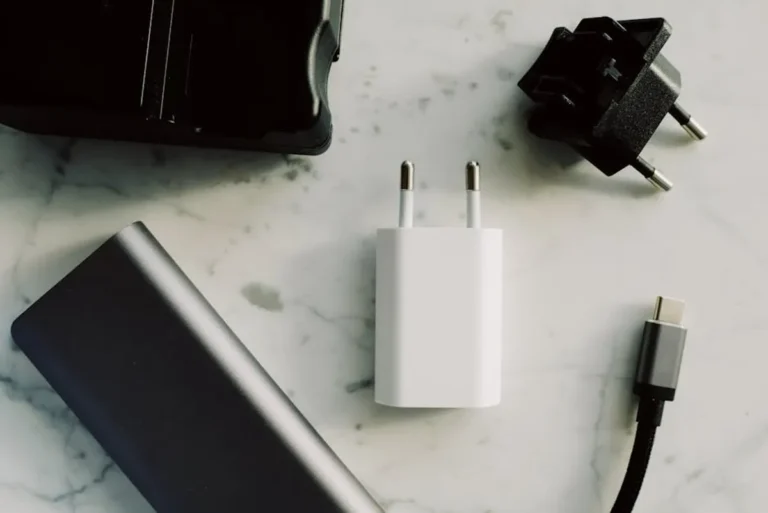

The USB-C port has become the universal standard for charging and data transfer across a vast array of devices, from smartphones and tablets to laptops and portable gaming consoles. This ubiquity, however, has also introduced a significant challenge: not all USB-C chargers are created equal. The market is saturated with options, varying wildly in power output, port configuration, size, and underlying technology. Choosing the right charger involves understanding your specific device requirements and usage patterns to ensure efficient, safe, and future-proof power delivery.
A poorly chosen charger can lead to slow charging speeds, insufficient power for demanding tasks, or even potential damage to your devices if safety standards are not met. The goal is to find a charger that not only meets your current needs but also offers versatility for future gadgets and adapts to different scenarios, whether you're at home, in the office, or traveling. This guide cuts through the noise, detailing the critical factors that differentiate a basic charger from an essential power accessory, and spotlights top models that deliver on performance and reliability.
What to Look For in a USB-C Charger
Navigating the USB-C charger landscape requires attention to several key specifications beyond just the port type. Understanding these elements ensures you select a charger that is compatible, efficient, and safe for your devices.
Power Delivery (PD) and Wattage
The most crucial factor is the charger's Power Delivery (PD) capability, measured in watts (W). USB-C PD is a standard that allows for higher power transfer than conventional USB charging. Your charger's wattage should at least match, or ideally exceed, the maximum power input your most demanding device requires. For instance, a smartphone might need 20-30W, a tablet 30-45W, and a laptop anywhere from 45W to 140W or more. A higher wattage charger can safely charge a lower-wattage device, but a lower wattage charger will either charge a higher-wattage device slowly or not at all.
Port Configuration
Consider how many devices you typically charge simultaneously. Chargers range from single USB-C port models to multi-port hubs featuring a mix of USB-C and older USB-A ports. Multi-port chargers often distribute their total wattage across all active ports, so check the manufacturer's specifications for power allocation. A 100W charger with four ports might deliver 65W from one USB-C port and 15W from the others when all are in use, not 100W from each.
Gallium Nitride (GaN) Technology
Many modern, high-performance USB-C chargers utilize Gallium Nitride (GaN) instead of traditional silicon. GaN allows chargers to be significantly smaller, lighter, and more efficient while producing less heat. This technology is particularly beneficial for high-wattage chargers, making them more portable and suitable for travel without compromising power output.
PPS (Programmable Power Supply)
PPS is a subset of the USB-C PD 3.0 standard that allows for dynamic voltage and current adjustments between the charger and the device. This enables more efficient and faster charging for devices that support it, particularly many Samsung Galaxy phones, which can achieve their maximum charging speeds with PPS-compatible chargers. If you own such devices, prioritizing PPS support can enhance your charging experience. This feature is particularly useful for fast charging android devices that support it.
Size and Portability
Your primary use case dictates the ideal size. For travel, look for compact chargers with foldable prongs. For a permanent desktop setup, a larger multi-port hub might be more suitable, often offering more stable power delivery and additional features.
Safety Certifications
Always verify that a charger carries relevant safety certifications such as UL (Underwriters Laboratories), CE (Conformité Européenne), and FCC (Federal Communications Commission). These certifications indicate that the product meets stringent safety and performance standards, protecting your devices from overcharging, overheating, and short-circuiting.
Cable Inclusion and Quality
Some chargers come bundled with a USB-C cable, but often these are basic. For high-wattage charging (e.g., 60W and above), you need a cable rated for that specific power delivery. A low-quality or improperly rated cable can bottleneck charging speeds or even pose a safety risk. Look for cables marked with their wattage capacity (e.g., "100W" or "240W").
Brand Reputation and Warranty
Opt for chargers from reputable brands known for quality and customer support. Established manufacturers typically invest more in research, development, and safety testing. A good warranty provides peace of mind against defects.
1. Anker GaNPrime 737 Charger (120W)
This Anker model represents a pinnacle in multi-device charging, leveraging GaNPrime technology for exceptional power density. With a robust 120W total output distributed across three ports, it intelligently allocates power based on connected devices, ensuring optimal charging for everything from a demanding laptop to a smartphone and earbuds simultaneously.
Best for: Power users and professionals needing to charge multiple high-demand devices (laptops, tablets, phones) concurrently with minimal footprint.
Pros: High total wattage with smart power allocation; compact size for its output; premium build quality; supports PPS for optimized fast charging on compatible devices.
Cons: Higher price point compared to single-port or lower-wattage options; can get warm under sustained full load, though within safe operating parameters.
Verdict: A top-tier choice for those requiring significant, flexible power delivery across several devices, making it a central charging hub for a tech-heavy setup.
2. UGREEN Nexode 100W GaN Charger
The UGREEN Nexode 100W offers a balanced approach to high-wattage, multi-port charging. Its GaN technology allows for a relatively compact form factor despite delivering 100W, making it suitable for both desktop use and travel. It typically features a mix of USB-C and USB-A ports, providing versatility for older peripherals alongside modern USB-C devices.
Best for: Desktop use or travel where charging a laptop and several additional devices (e.g., phone, smartwatch) from a single outlet is necessary.
Pros: Solid 100W output for demanding laptops; multiple ports (often 3C+1A or 2C+2A) for varied connectivity; competitive pricing for its feature set; good thermal management.
Cons: Not as compact as some single-port chargers; power distribution can be complex across all ports, requiring attention to ensure optimal charging speeds for specific devices.
Verdict: An excellent all-rounder that provides substantial power and versatile port options, making it a strong value proposition for comprehensive charging needs.
3. Satechi 100W USB-C PD Wall Charger
Satechi’s 100W charger focuses on premium aesthetics and reliable, high-wattage single-port delivery. Often featuring a sleek, minimalist design, it’s built for users who prioritize a clean setup and dependable power for their primary device, typically a high-performance laptop. While some versions offer multiple ports, the core appeal lies in its robust output from a single USB-C connection.
Best for: Dedicated high-power laptop charging; users who prioritize premium design and build quality for a specific device.
Pros: Elegant and durable construction; consistent 100W output for fast laptop charging; compact for its power rating; integrates well into modern desk environments.
Cons: Typically features fewer ports, limiting multi-device charging; higher price point due to premium branding and design focus.
Verdict: Ideal for users who need a powerful, reliable, and aesthetically pleasing charger primarily for a single high-wattage device, such as a MacBook Pro or similar laptop.
4. Belkin BoostCharge Pro Dual USB-C GaN Wall Charger (65W)
Belkin’s 65W dual USB-C charger is designed for portability and efficient two-device charging. Utilizing GaN technology, it remains compact while delivering sufficient power for a laptop and a phone, or two phones/tablets simultaneously. Its foldable prongs enhance its travel-friendliness, making it a practical choice for users on the go.
Best for: Travelers and commuters needing to charge a laptop (up to 65W) and a secondary device quickly from a single compact unit.
Pros: Reputable brand with strong safety standards; compact size with foldable prongs for travel; intelligent power distribution for two devices; supports fast charging protocols.
Cons: 65W total might be insufficient for larger, more power-hungry laptops under heavy load; only two ports limits overall device charging capacity.
Verdict: A dependable and compact charger from a trusted brand, offering a balanced solution for efficient dual-device charging, especially suited for travel and lighter computing tasks.
5. Apple 35W Dual USB-C Port Compact Power Adapter
Apple's 35W dual USB-C charger is tailored for users within the Apple ecosystem, offering a compact and aesthetically consistent charging solution. While its total wattage is modest compared to some competitors, it's perfectly suited for charging iPhones, iPads, and smaller MacBooks (like the MacBook Air) simultaneously, prioritizing integration and design.
Best for: Apple users with iPhones, iPads, and MacBook Airs who prioritize brand compatibility, compact size, and dual-device charging for smaller gadgets.
Pros: Extremely compact and lightweight; reliable Apple build quality; dual USB-C ports for two devices; ideal for travel and minimal desk clutter.
Cons: Lower wattage limit (35W total) means it's not suitable for larger MacBooks or power-hungry laptops; higher price for its output compared to non-Apple alternatives.
Verdict: A niche but effective choice for Apple device owners needing a compact, dual-port charger for their smaller devices, valuing brand consistency and portability.
6. Anker Nano II 65W
The Anker Nano II 65W is a testament to the power of GaN technology, shrinking a substantial 65W output into an incredibly small, single-port form factor. This charger is designed for maximum portability without sacrificing the ability to fast-charge a wide range of devices, including most laptops, tablets, and smartphones.
Best for: Minimalist travelers, digital nomads, or anyone needing to fast-charge a single laptop or high-power device with the absolute smallest charger possible.
Pros: Exceptionally small and lightweight with foldable prongs; reliable 65W output for most laptops; supports various fast-charging protocols including PPS.
Cons: Only one USB-C port, limiting multi-device charging; 65W might just meet the minimum requirement for some larger laptops under heavy load.
Verdict: The ultimate choice for portability when your primary need is efficient, single-device charging for a laptop or fast-charging a smartphone, perfect for slipping into any bag or pocket.
7. Spigen ArcStation Pro 65W GaN (4-Port)
The Spigen ArcStation Pro 65W GaN charger provides a versatile multi-port solution in a compact design. Featuring a combination of USB-C and USB-A ports, it aims to be a central charging hub for a variety of devices, from laptops to older accessories, all powered by a single wall outlet. Its 65W total output is intelligently distributed across the ports.
Best for: Users who need to charge multiple devices (laptop, phone, smartwatch, earbuds) from a single wall outlet, balancing power and port count.
Pros: Four ports (typically 2x USB-C, 2x USB-A) offer broad compatibility; relatively compact for its port count and wattage; sleek, understated design; reliable power delivery.
Cons: 65W total output means power can be significantly split when all four ports are in use, not ideal for multiple high-power devices simultaneously.
Verdict: A practical and efficient desktop charger for managing several moderate-power devices, providing a good balance between port versatility and overall output for a typical home or office setup.
8. Baseus GaN3 Pro 100W Desktop Charger
The Baseus GaN3 Pro is a dedicated desktop charging station, designed to replace multiple wall warts with a single, powerful unit. With 100W of total output and an array of USB-C and USB-A ports, it's built to handle a comprehensive suite of electronics, making it ideal for a home office or workstation where multiple devices are routinely charged.
Best for: Home office setups, content creators, or anyone needing a powerful, multi-port desktop solution to charge a laptop and several peripherals simultaneously.
Pros: High 100W total output for robust laptop charging; multiple USB-C and USB-A ports for broad device compatibility; includes a long AC cable for flexible placement; stable desktop form factor.
Cons: Not designed for portability due to its size and separate AC cable; power distribution across many ports can require careful management to optimize charging speeds.
Verdict: An excellent, powerful desktop charging station that consolidates power delivery for a full array of electronics, perfect for a comprehensive home or office setup.
9. UGREEN Nexode Mini 30W GaN Charger
The UGREEN Nexode Mini 30W charger embodies ultra-compact design for everyday fast charging. Leveraging GaN technology, it delivers 30W from a single USB-C port in a form factor barely larger than a standard 5W iPhone charger. This makes it an ideal companion for fast-charging smartphones and small tablets without adding bulk.
Best for: Fast-charging smartphones (especially iPhones and Androids supporting PD), small tablets, or as a highly portable secondary charger for light duty.
Pros: Extremely small and lightweight; affordable price point; 30W is sufficient for most phone fast-charging needs; foldable prongs enhance portability.
Cons: Only one port; 30W is insufficient for laptops; build quality, while good for the price, may not feel as premium as higher-end Anker models.
Verdict: A highly portable and economical option for quick, efficient charging of smartphones and other small devices, perfect for daily carry or as a backup.