
Navigating the complexities of modern life often involves managing a multitude of tasks, from routine household chores to personal organization. The right gadgets can significantly streamline these efforts, transforming time-consuming activities into simpler, more efficient processes. This guide focuses on identifying devices that offer tangible benefits, prioritizing practicality, reliability, and genuine problem-solving capabilities over novelty. We examine how specific gadget categories address common pain points, providing concrete insights into their operational advantages and potential limitations, to help users make informed decisions about integrating new technology into their daily routines.
What to Look For in Useful Gadgets
When evaluating gadgets designed to simplify daily life, several criteria inform a practical choice. Prioritize devices that offer clear, measurable improvements to existing workflows or solve persistent problems. Consider the gadget's primary function and whether it genuinely reduces effort or saves time. Ease of integration into your current setup is crucial; complex installations or steep learning curves can negate any perceived benefits. Durability and build quality contribute to long-term value, as frequent replacements undermine efficiency. Evaluate the device's connectivity requirements and compatibility with other systems you use, such as smart home platforms or mobile operating systems. Finally, assess the total cost of ownership, including initial purchase price, ongoing maintenance, and potential subscription fees, ensuring the gadget provides a sustainable return on investment in terms of convenience and efficiency.
1. Smart Plug Systems
Smart plug systems convert standard electrical outlets into remotely controllable power sources, enabling users to manage non-smart devices via smartphone apps or voice commands. These systems typically connect to a home's Wi-Fi network, allowing for scheduling, timer functions, and remote on/off toggling for lamps, fans, coffee makers, and other appliances. Their utility lies in automating repetitive tasks and providing granular control over energy consumption, contributing to both convenience and potential energy savings.
Best for: Automating lights, small appliances, or charging routines; users seeking basic smart home functionality without replacing existing devices.
Pros:
- Enables remote control and scheduling of traditional appliances.
- Relatively low cost of entry for smart home integration.
- Simple setup and integration with most Wi-Fi networks.
- Can monitor energy usage in some models, aiding in consumption awareness.
Cons:
- Requires a stable Wi-Fi connection for full functionality.
- Limited to on/off control; does not add advanced features to non-smart devices.
- May occupy one or both outlets, depending on design.
Verdict: Smart plug systems offer a practical and accessible entry point into home automation, providing tangible convenience for managing routine power needs and enhancing control over non-smart devices.
2. Robot Vacuum Cleaners
Robot vacuum cleaners are autonomous floor-cleaning devices designed to navigate and clean various floor surfaces without direct human intervention. Equipped with sensors, these units detect obstacles, map rooms, and return to charging docks automatically. Advanced models feature app control, scheduling, and multi-floor mapping, reducing the manual effort required for routine floor maintenance across hard floors and low-pile carpets.
Best for: Regular maintenance cleaning of hard floors and carpets; individuals with busy schedules or mobility limitations.
Pros:
- Automates daily floor cleaning, saving significant time and effort.
- Can clean on a schedule, even when occupants are away.
- Reaches under furniture and into tight spaces.
- Some models include mopping functions for dual utility.
Cons:
- Requires periodic emptying of dustbin and maintenance of brushes.
- May struggle with high-pile carpets, complex layouts, or significant clutter.
- Initial cost is higher than traditional vacuum cleaners.
- Can get stuck on cords or small objects if not cleared.
Verdict: A robot vacuum effectively offloads a common household chore, providing consistent floor cleanliness with minimal user input, particularly beneficial for maintaining tidiness between deeper cleans.
3. Key and Item Finders
Key and item finders are small, Bluetooth-enabled tags that attach to frequently misplaced items like keys, wallets, or remote controls. When an item is lost within a certain range, users can activate an audible alert from their smartphone app, leading them to the item. Many models also offer reverse finding, allowing the tag to ring the connected phone, and some incorporate crowd-sourced GPS tracking for items lost further afield, leveraging a network of other users' devices to anonymously locate tags.
Best for: Individuals prone to misplacing everyday items; reducing time spent searching for essentials.
Pros:
- Significantly reduces time and frustration associated with lost items.
- Compact and lightweight, easily attachable to various objects.
- Long battery life in many models, often user-replaceable.
- Community find features can extend tracking range beyond Bluetooth.
Cons:
- Bluetooth range limitations mean items must be relatively close.
- Requires a smartphone app and active Bluetooth connection.
- Privacy concerns for crowd-sourced location features, though data is typically anonymized.
Verdict: These small trackers offer a straightforward solution to a common daily frustration, proving their value by ensuring critical items are quickly locatable when needed.
4. Smart Water Bottles
Smart water bottles track fluid intake throughout the day and often remind users to drink water at regular intervals. They connect to smartphone apps via Bluetooth, where users can set hydration goals, monitor progress, and receive personalized prompts. Some models integrate with fitness trackers or health apps, providing a holistic view of daily wellness metrics. The primary aim is to encourage consistent hydration, which supports overall health and cognitive function.
Best for: Individuals aiming to improve their daily water intake; those who frequently forget to drink water.
Pros:
- Provides consistent reminders to hydrate, improving adherence to fluid intake goals.
- Offers data-driven insights into hydration patterns.
- Integrates with other health and fitness platforms for comprehensive tracking.
- Can help establish healthier habits over time.
Cons:
- Requires regular charging for electronic components.
- Relies on user compliance to actually drink when reminded.
- Higher cost than traditional water bottles.
- Requires a smartphone for full functionality.
Verdict: For those who struggle with consistent hydration, a smart water bottle offers a proactive, data-supported method to meet daily fluid intake targets, contributing to improved well-being.
5. Portable Power Banks
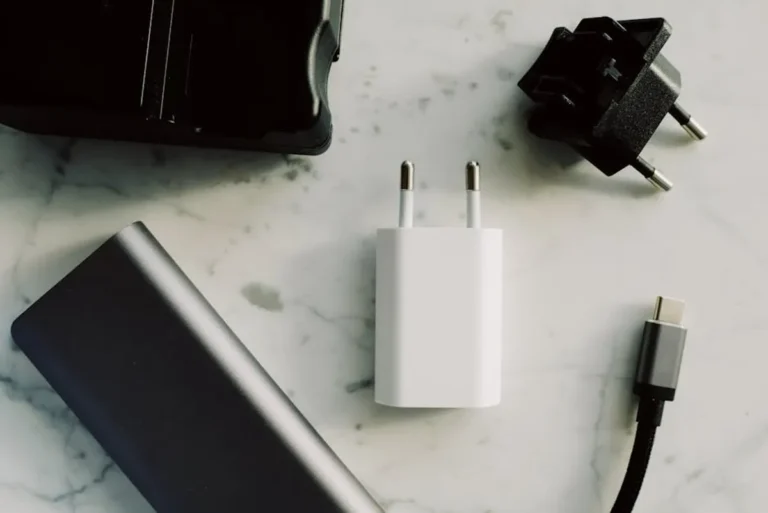
Portable power banks are rechargeable battery packs designed to charge electronic devices like smartphones, tablets, and smartwatches on the go. They vary in capacity, measured in milliampere-hours (mAh), and output ports, offering different charging speeds and compatibility. Their utility stems from providing critical power access in situations where wall outlets are unavailable, preventing device downtime and ensuring continuous connectivity or productivity.
Best for: Travelers, commuters, or anyone needing reliable power access away from traditional outlets; ensuring devices remain charged during outages.
Pros:
- Provides essential backup power for mobile devices.
- Available in a wide range of capacities to suit different needs.
- Compact and easily portable for daily carry or travel.
- Can charge multiple devices simultaneously in many models.
Cons:
- Requires pre-charging itself to be effective.
- Higher capacity models can be bulky and heavy.
- Charging speed varies depending on the power bank's output and device's input.
Verdict: A portable power bank is an indispensable tool for maintaining device functionality throughout the day, offering peace of mind and uninterrupted access to essential digital tools.
6. Noise-Cancelling Headphones
Noise-cancelling headphones use active noise control to reduce unwanted ambient sounds, such as engine hum, office chatter, or public transport noise. Microphones on the headphones pick up external sounds, and the device generates an inverse sound wave to cancel them out, creating a quieter listening environment. This technology enhances focus, improves audio clarity for music or calls, and provides a sense of calm in noisy surroundings.
Best for: Commuters, office workers, students, or anyone seeking to minimize distractions and improve audio experience in loud environments.
Pros:
- Significantly reduces environmental noise, aiding concentration and relaxation.
- Improves audio quality for music, podcasts, and calls.
- Available in various form factors (over-ear, on-ear, in-ear).
- Some models offer transparency modes to hear surroundings when needed.
Cons:
- Requires battery power for noise-cancelling function.
- Higher cost than standard headphones.
- Can sometimes create a subtle pressure sensation in the ears.
- May not completely eliminate all types of noise, especially sudden, sharp sounds.
Verdict: Noise-cancelling headphones are a valuable asset for creating personal quiet zones, enhancing productivity, and improving the enjoyment of audio content in challenging acoustic environments.
7. Smart Lighting Systems
Smart lighting systems replace traditional light bulbs with internet-connected LED bulbs that can be controlled wirelessly via smartphone apps, voice assistants, or smart switches. These systems allow users to adjust brightness, color temperature, and even color, as well as set schedules, create scenes, and automate lighting based on presence detection or time of day. Their primary benefit is offering flexible, energy-efficient illumination tailored to specific activities and moods.
Best for: Enhancing home ambiance, automating lighting routines, improving energy efficiency, and creating personalized lighting experiences.
Pros:
- Offers granular control over lighting parameters (brightness, color).
- Enables automation and scheduling for convenience and security.
- LED technology provides energy efficiency and long lifespan.
- Can integrate with other smart home devices for unified control.
Cons:
- Higher upfront cost compared to traditional bulbs.
- Requires a stable Wi-Fi network and sometimes a dedicated hub.
- Setup can be more involved for multi-room installations.
Verdict: Smart lighting transforms home illumination from a static utility into a dynamic, customizable element that enhances comfort, security, and energy management.
8. Digital Note-Taking Tablets
Digital note-taking tablets are specialized devices designed to replicate the experience of writing on paper while offering the benefits of digital storage and organization. They feature pressure-sensitive screens and styluses, allowing users to write, draw, and annotate documents digitally. Notes can be organized into folders, searched, and synced to cloud services, eliminating the need for physical notebooks and simplifying information management.
Best for: Students, professionals, or creatives who frequently take notes, sketch, or review documents and prefer a paper-like writing experience.
Pros:
- Combines the tactile feel of paper with digital organization and searchability.
- Reduces paper consumption and clutter.
- Notes are easily backed up and accessible across devices.
- Long battery life due to E Ink or similar low-power displays.
Cons:
- Limited functionality beyond note-taking compared to general-purpose tablets.
- Higher cost than traditional notebooks.
- Screen refresh rates can be slower than LCD/OLED displays.
Verdict: For dedicated note-takers, these tablets offer a focused, eco-friendly, and highly organized alternative to traditional paper, streamlining information capture and retrieval.
9. Electric Kettle with Temperature Control
An electric kettle with temperature control allows users to heat water to specific temperatures, typically in increments, rather than just boiling. This feature is crucial for preparing various types of tea (which require specific brewing temperatures), pour-over coffee, or baby formula, where precise heat is essential for optimal flavor extraction or safety. Many models also include a "keep warm" function, maintaining the desired temperature for an extended period.
Best for: Tea enthusiasts, coffee connoisseurs, parents preparing formula, or anyone needing precise water temperatures for culinary tasks.
Pros:
- Provides precise temperature control for optimal beverage preparation.
- Faster and more energy-efficient than stovetop kettles.
- "Keep warm" function adds convenience for multiple servings.
- Often includes safety features like automatic shut-off.
Cons:
- Higher cost than basic electric kettles.
- Requires counter space and an electrical outlet.
- Some models can be noisy during operation.
Verdict: This specialized kettle elevates the preparation of hot beverages and other temperature-sensitive liquids, offering a level of precision and convenience that a standard kettle cannot match.
10. Smart Door Locks
Smart door locks replace or augment traditional deadbolts with internet-connected mechanisms, allowing users to lock and unlock doors remotely via smartphone apps, keypads, or voice commands. They often include features like guest access codes, activity logs, and auto-lock functions, enhancing security and convenience. Integration with smart home systems enables scenarios such as unlocking the door when a specific family member arrives home.
Best for: Homeowners seeking enhanced security, remote access control, and simplified key management; property managers.
Pros:
- Offers remote control and monitoring of door access.
- Eliminates the need for physical keys, reducing loss risk.
- Provides temporary access codes for guests or service providers.
- Activity logs offer a record of who enters and exits.
Cons:
- Requires a stable Wi-Fi connection or hub for remote features.
- Relies on battery power, requiring periodic replacement or recharging.
- Installation can be more complex than traditional locks.
- Security concerns if not properly secured against cyber threats.
Verdict: Smart door locks modernize home security and access, offering flexible control and monitoring capabilities that enhance peace of mind and daily convenience for residents.
11. Automatic Pet Feeders
Automatic pet feeders dispense pre-portioned meals to pets at scheduled times, ensuring consistent feeding schedules even when owners are away or busy. These devices range from simple gravity feeders to advanced models with Wi-Fi connectivity, app control, portion customization, and even integrated cameras for remote monitoring. They help manage pet weight, prevent overeating, and alleviate anxiety for pets accustomed to regular meal times.
Best for: Pet owners with unpredictable schedules, those managing pet weight, or individuals seeking to automate pet care routines.
Pros:
- Ensures consistent meal times and portions for pet health.
- Allows for remote feeding and monitoring in Wi-Fi models.
- Reduces stress for pets accustomed to routine.
- Can help prevent overfeeding and manage dietary restrictions.
Cons:
- Requires regular cleaning and refilling.
- Higher-end models can be expensive.
- Relies on power source (batteries or outlet); power outages can disrupt schedules.
- Some pets may attempt to "break into" the feeder.
Verdict: An automatic pet feeder provides a reliable solution for maintaining pet feeding schedules, offering convenience for owners and stability for pets, especially in unpredictable daily routines.
12. Handheld Garment Steamers
Handheld garment steamers quickly remove wrinkles from clothes using steam, offering a faster and often gentler alternative to traditional ironing. These compact devices heat water to produce continuous steam, which relaxes fabric fibers, smoothing out creases without direct contact or the need for an ironing board. Their portability and rapid heat-up times make them suitable for quick touch-ups and travel.
Best for: Quick wrinkle removal, delicate fabrics, travelers, and those who dislike traditional ironing.
Pros:
- Faster than ironing for many garments, especially delicate fabrics.
- Gentler on clothes than direct iron heat, reducing risk of damage.
- Portable and easy to use, ideal for travel or last-minute touch-ups.
- Requires no ironing board, saving space and setup time.
Cons:
- Water reservoir capacity limits continuous steaming time.
- May not achieve the crispness or sharp creases of an iron.
- Requires distilled water in some regions to prevent mineral buildup.
- Can be less effective on very heavy or deeply creased fabrics.
Verdict: A handheld garment steamer is a practical tool for maintaining presentable clothing with minimal effort, offering a convenient alternative for daily wear and travel.
Choosing the Right Gadget for Your Needs
Selecting the most suitable gadgets involves a methodical assessment of your specific daily challenges and preferences. Begin by identifying the tasks or inconveniences you wish to address. Consider whether the gadget offers a direct and efficient solution, or if it merely adds another layer of complexity. Evaluate the device's compatibility with your existing technology ecosystem, such as smartphone operating systems or smart home platforms, to ensure seamless integration. Research user reviews for insights into real-world performance and common issues. Finally, weigh the initial investment against the long-term benefits in terms of time saved, enhanced convenience, or improved well-being. A gadget that genuinely simplifies a routine and aligns with your lifestyle will provide the most enduring value.
Frequently Asked Questions
Do these gadgets require constant internet access to function?
Many smart gadgets, particularly those with remote control or automation features, rely on a stable Wi-Fi connection for full functionality. However, some devices, like portable power banks or handheld steamers, operate independently of internet access once charged or filled.
Are these gadgets difficult to set up?
Most modern gadgets are designed for user-friendly setup, often involving a smartphone app and a few guided steps. Complexity can vary by device type and brand, but manufacturers generally prioritize ease of installation to encourage adoption.
Can these gadgets really save me money?
While many gadgets require an initial investment, some can lead to long-term savings. For instance, smart plugs can reduce energy consumption by automating device power, and robot vacuums can reduce the need for professional cleaning services. The financial impact depends on individual usage patterns and the specific gadget's function.
How do I ensure the gadgets I choose are secure?
For internet-connected devices, prioritize brands with a reputation for strong data security and regular software updates. Use unique, strong passwords, enable two-factor authentication where available, and ensure your home Wi-Fi network is secured. Regularly check for firmware updates to address potential vulnerabilities.